Patios, paving and driveways in London
Patios, paths and driveways in natural stone, porcelain, block paving and resin, laid on a base that is built to last.
Patios, paving & driveways
The part nobody sees decides how long it lasts.
Paving that sinks, driveways that hold puddles and patios that crack nearly always come down to what is underneath: too little excavation, a thin sub-base, or nowhere for the water to go.
We dig out properly, lay and compact the sub-base in layers, and sort the drainage before any surface goes down. The same team does the foundations and drains for our extensions.
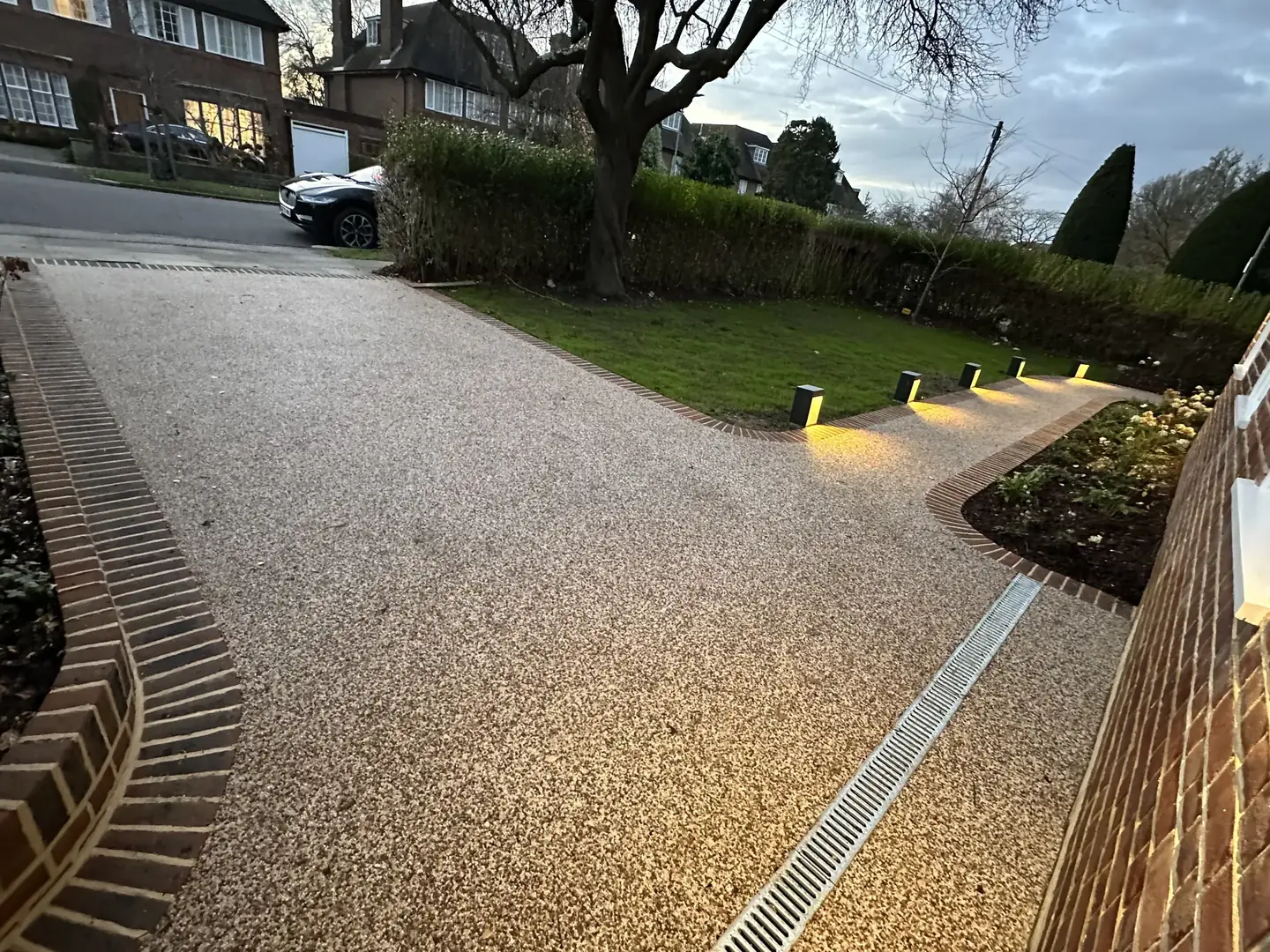
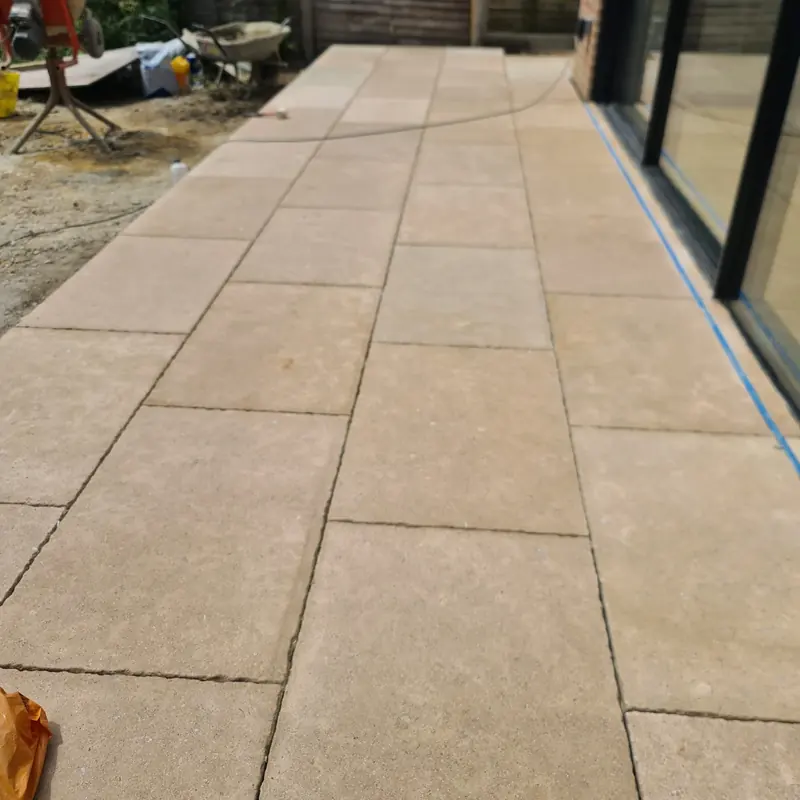
Recent outdoor work includes natural stone patios in a range of colours, sizes and laying patterns, with even, clean joints, and a resin-bound front path finished with matching brick edging and garden lighting set along its length.
Driveways
Block paving and resin-bound driveways, with edgings, drainage and a sub-base built for vehicles.
Patios and paths
Porcelain, natural stone and concrete paving, laid to falls so water runs away from the house.
Edging and garden lighting
Brick edging that frames paths and borders, with outdoor lighting wired in as the paving goes down.
Drainage
New drain runs, gullies, inspection chambers, soakaways and waterproofing below ground.
Foundations and footings
Trench and pad foundations for extensions, walls and outbuildings, inspected by building control.
The process
How a paving job runs.
Visit and written quote
We check levels, drainage and access, talk through materials, and send an itemised written estimate.
Excavation
The area is dug out to the right depth and the spoil is taken away.
Base and drainage
Drains and edgings go in, and the sub-base is laid and compacted in layers.
Surface and finish
The paving or resin is laid, jointed and cleaned down, ready to use.
Our work
Our patios, paving & driveways work
2 completed jobs, photographed on site by our own team.
 Patios, paving & driveways
12 photos
External Paving & Slabs — Various Projects
London View project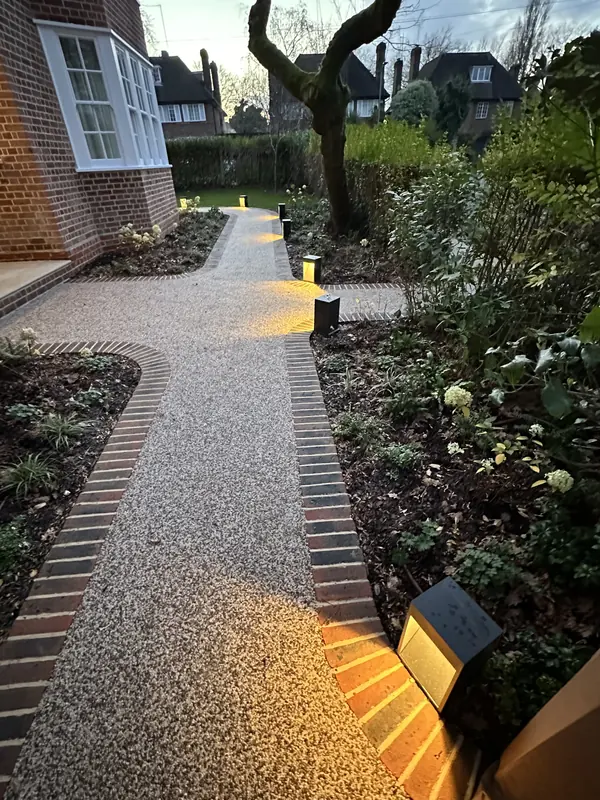 Patios, paving & driveways
9 photos
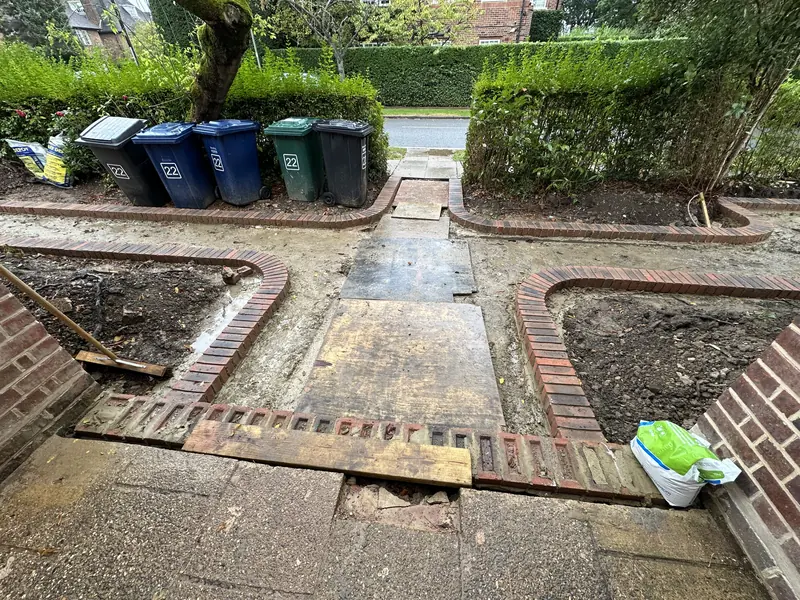
Landscaping & Groundworks – Resin Bound Pathway
East Finchley N2 View project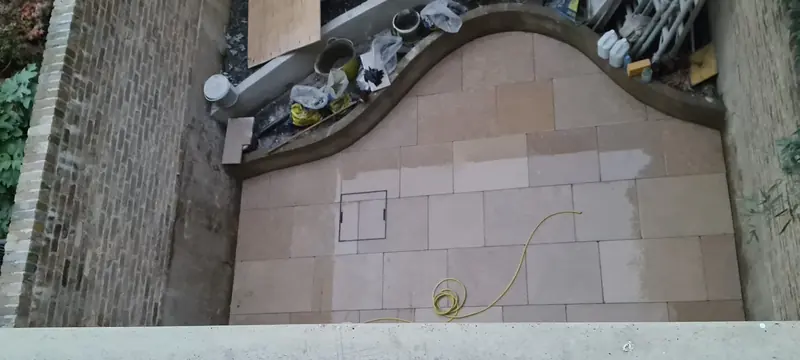
Common questions
Patios, paving & driveways: what people ask us.
Do I need planning permission for a new driveway?
Not if the surface lets water through, such as resin-bound gravel or permeable block paving, or if the water drains to a lawn or border within your garden. Paving more than 5 square metres of a front garden with a surface that sends rainwater to the road does need planning permission.
Do I need permission for a dropped kerb?
Yes. Lowering the kerb so you can drive across the pavement needs approval from your local council, and the council often insists on using its own contractor for the pavement itself.
Resin-bound or block paving: which is better?
Both last well on a proper base. Resin-bound gives a smooth, permeable surface with no weeds and no loose stones. Block paving is easier to lift and re-lay if you ever need to reach a pipe underneath. We bring samples of both.
Natural stone or porcelain for a patio?
Natural stone has the most character and comes in many colours, sizes and laying patterns. Porcelain is very hard-wearing and easy to keep clean. Both need a solid base laid to falls so rainwater runs away from the house, and we bring samples so you can see them in your own garden.
How long does a driveway take?
As a rough guide, about a week for an average front driveway, depending on the size, the drainage and the weather.
Related services
Often done together.
Planning this kind of work?
Tell us about the job and we'll come out, measure up and send a free written quote, with no obligation.